October 20, 2025
Grantee Partner Spotlight: Soulforce
by Maura Fernández Salas
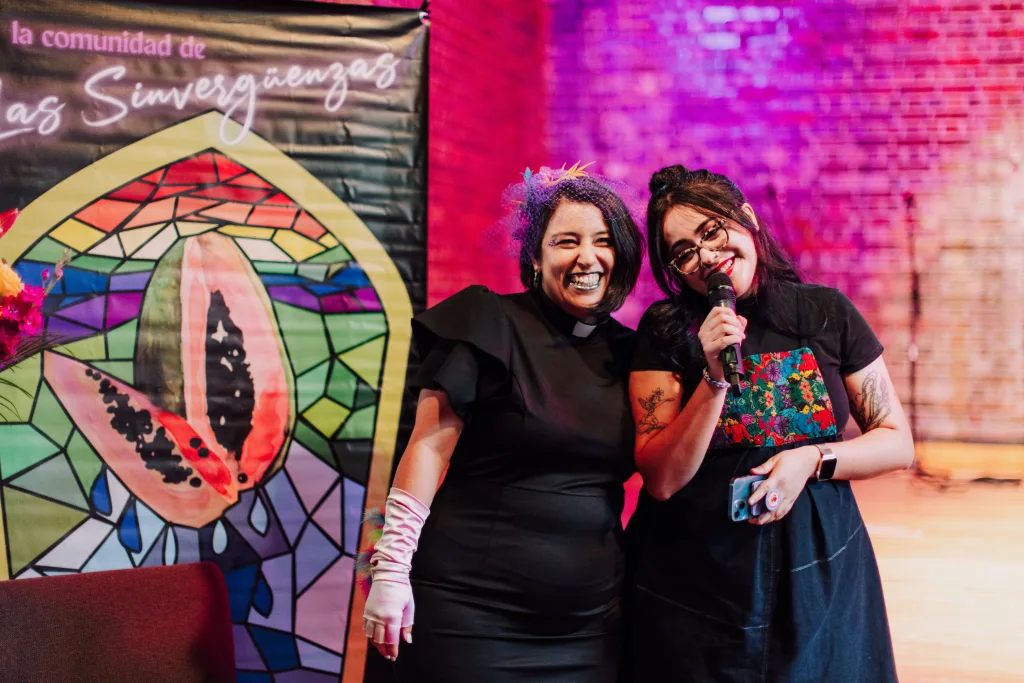
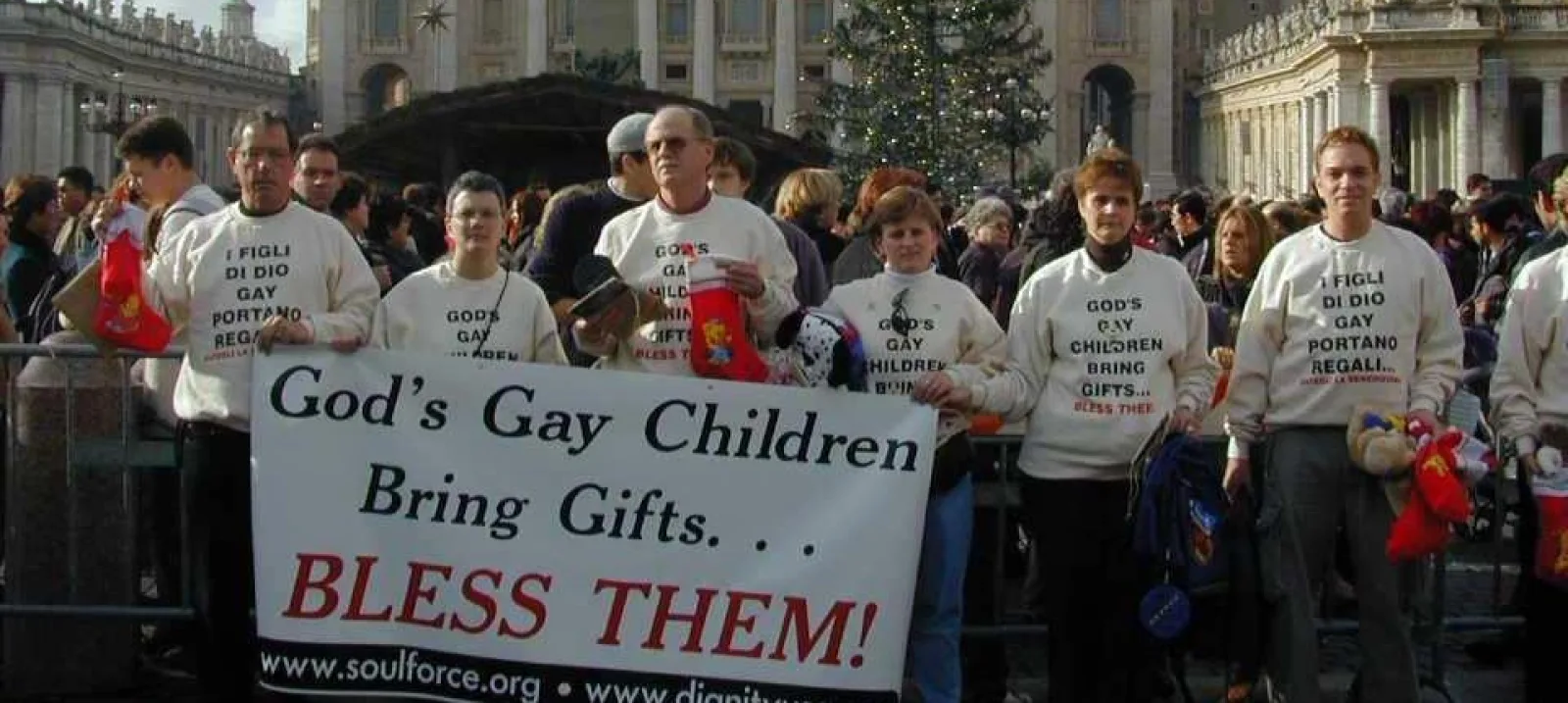
Ms. Foundation is proud to support our grantee partners, who are at the forefront of organizing and creating solutions that improve people’s lives and bring us closer to achieving a true democracy. The insight and perspective they provide is invaluable. The Q&A below was generated by Soulforce Fundraising Manager Maura Fernández Salas. For 25 years, Soulforce has been decloaking the ideologies of Christian Supremacy in order to end the religious and political oppression of LGBTQIA+ people and build the strategies of interdependence necessary to help our communities heal from weaponized religion. Soulforce is an Activist Care & Collaboration Fund grantee partner. What brought you to this work? Soulforce is led by LGBTQIA+ people who have been directly impacted by Weaponized Religion, and more specifically, Weaponized Christianity. The geographic focus of our work begins in the southern United States, where Christianity, as the religion of power, can be felt most viscerally. Soulforce staff and members are the lesbian, gay, bisexual, queer, and trans kids—plus their allied friends and family—who were rejected by traditional religious spaces. Frequently arriving in our community out of social justice and inclusion work, Soulforcers have found time and time again that when we investigate the harmful symptoms of Christian fundamentalism, the root problem lies with white supremacy and patriarchy. Each generation of Soulforce brings new insights and innovations that shape the organization’s growing body of work. Soulforce remains fearlessly committed to achieving Queer Liberation in our lifetimes and is equally committed to ensuring the organization is led by directly affected peoples. How do you connect/collaborate in your community? Who are your key partners? Soulforce acts as a strategic partner to activists and organizations promoting social justice in hostile contexts where Christianity is used to degrade or deny equal human rights. We collaborate with groups and coalitions within social justice movements, nonprofits, higher education, and human rights spheres. In all of our work, we aim to identify and deconstruct religious rhetorical arguments that hinder LGBTQIA+ human rights, incorporate Queer and Feminist theological messaging into our campaigns and tactics, and dispel fears and hesitations that prevent organizations from confronting religion-based violence. Drawing on more than 25 years of experience challenging the Religious Right, we provide strategic planning partnerships to develop campaigns that unapologetically contest religion-based violence wherever it would otherwise go unchallenged. We welcome collaborations and partnerships with allied organizations and individuals across the United States and the Global South. What are you learning or what are you teaching? There are so many things to learn. We are always learning from our community, as we are all teachers and learners forever. One of the things we’re learning right now is how hungry folks are for the work of demystifying colonized religion and how essential it is to pair the deconstructive work with the healing and constructive parts as well. In response to this community need, our team has worked to develop resources and programming based on uncovering and understanding liberatory interpretations of the Bible. Alongside this deconstructive work, our team has fearlessly created programs that provide experiential spaces of spiritual healing that center the lives, bodies, experiences, and artistic expressions of Queer and Trans people. We aim to teach people how to recognize white Christian Supremacy not only in its most overtly racist or xenophobic forms but also in the subtle ways it manifests around us. It’s important to understand that this nation was founded on a colonized version of Christianity, which used the sword and the gun as tools of missionizing to serve empire rather than to liberate the oppressed. Tell us about a recent victory or something you’re proud of. One of the programs we are most excited about sharing with more communities in the U.S. South is the series of Culto Cuir services, which are experiential spiritual spaces, similar to church. In English, we call it Church of the Queerly Beloved, and this series is our team’s direct response to the violent anti-Trans policies that litter international legislatures. These community-led events reimagine what is possible when all diversity is celebrated as divine and include activities such as drag performances, spoken word, prayers and blessings, symbolic apologies from religious leaders and mental health providers on behalf of their institutions, and Trans Baptisms. The symbolic apology gives participants harmed by the church and mental health institutions an opportunity to heal from past wounds when we were told our identities and/or behaviors were unnatural or pathological. The Trans Baptisms center and affirm our Trans beloveds’ transitions and provide space for their community to support them as they move into their new name, if chosen. Through creative programs like Church of the Queerly Beloved, we aim to create community opportunities for healing and the reimagining of Queer Liberation. It is our absolute honor to share these moments with those who join us. What can philanthropy do better, and/or how can individuals be helpful allies? Philanthropy has much to gain by focusing on long-term change and addressing the root causes of institutionalized inequities. Crises keep emerging one after another, and amidst the chaos, we overlook the deeper historical and theological foundations that led us here in the first place. There’s a reluctance to talk about the past—about where our systems and beliefs came from—and especially about how many of our theologies and religious practices are rooted in colonization, forced conversion, and the genocidal power of empire. If we want meaningful, lasting change, we must be willing to go all the way back: to examine and uproot those harmful ideologies and ways of thinking at their source. Much of the change we need today won’t come from legislation alone or from within a democratic system that’s currently so fragile. Instead, it requires deep cultural transformation driven by relationship-building and community-centered work. That’s why it’s essential to strike a balance between evidence-based evaluation tools and long-term narrative work. The reproductive justice movement shows what’s possible when we trust people, trust communities, and trust organizations that have already proven they can steward resources and lead the work on the ground. What gives you hope? The weight of shame constructed by Christian practices leaves people—especially women and members of systemically oppressed groups—extremely vulnerable to manipulation and social control. Each time we see one of our LGBTQIA+ beloveds shed the burdens of a retributive or vengeful God, when we witness even a glimmer of spiritual healing in our Queer and Trans event participants, we feel hope. Every time we gather around our altar before facilitating another workshop focused on unpacking the impacts of Spiritual Violence, we are reminded of those who came before us, those who dreamed of our futures. Each new person who joins this work—whether through Bible deconstruction, raising awareness about the history of colonized religion, or recognizing divine Queer creation in the animal kingdom—brings us joy. When someone comes to a new understanding of how systems of power, such as capitalism and patriarchy, shape everyday life, including the very definitions of “man” and “woman,” they are one step closer to freeing themselves from spiritual domination. These sparks of hope are what fuel Soulforce to continue to grow and expand—like dandelions breaking through cracks in the pavement or young trees growing from the ashes of their ancestors. Queer love has always been divine and eternal.