June 2, 2026
Grantee Partner Spotlight: Kuluntu Reproductive Justice Center
by Khye Blue
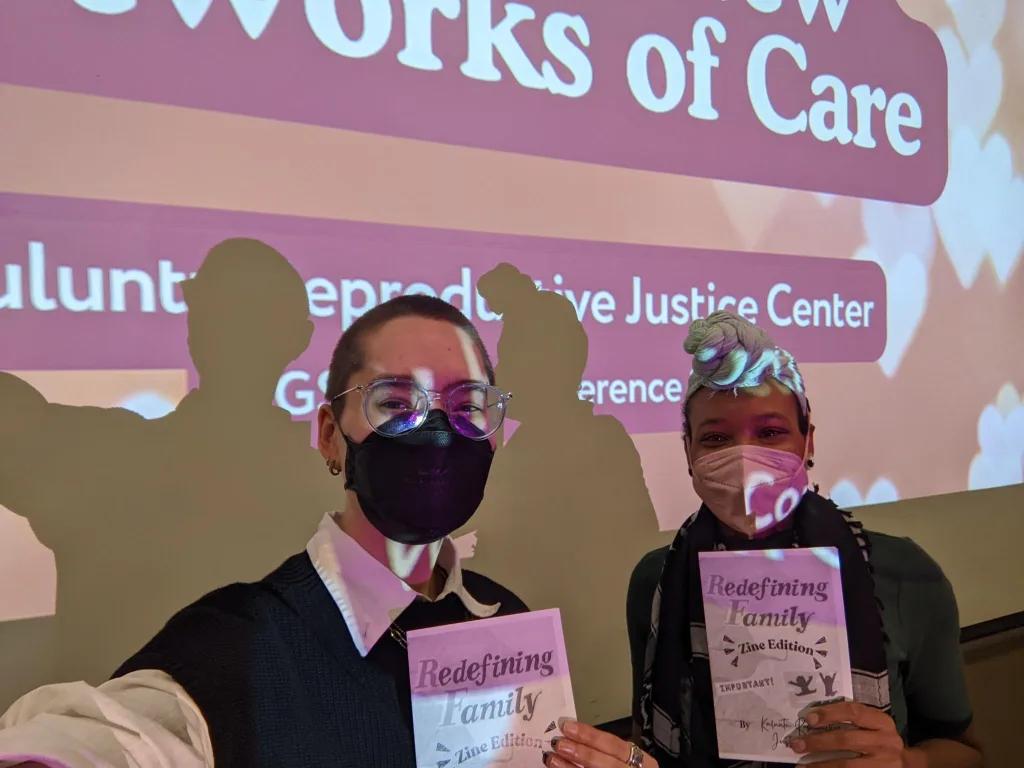
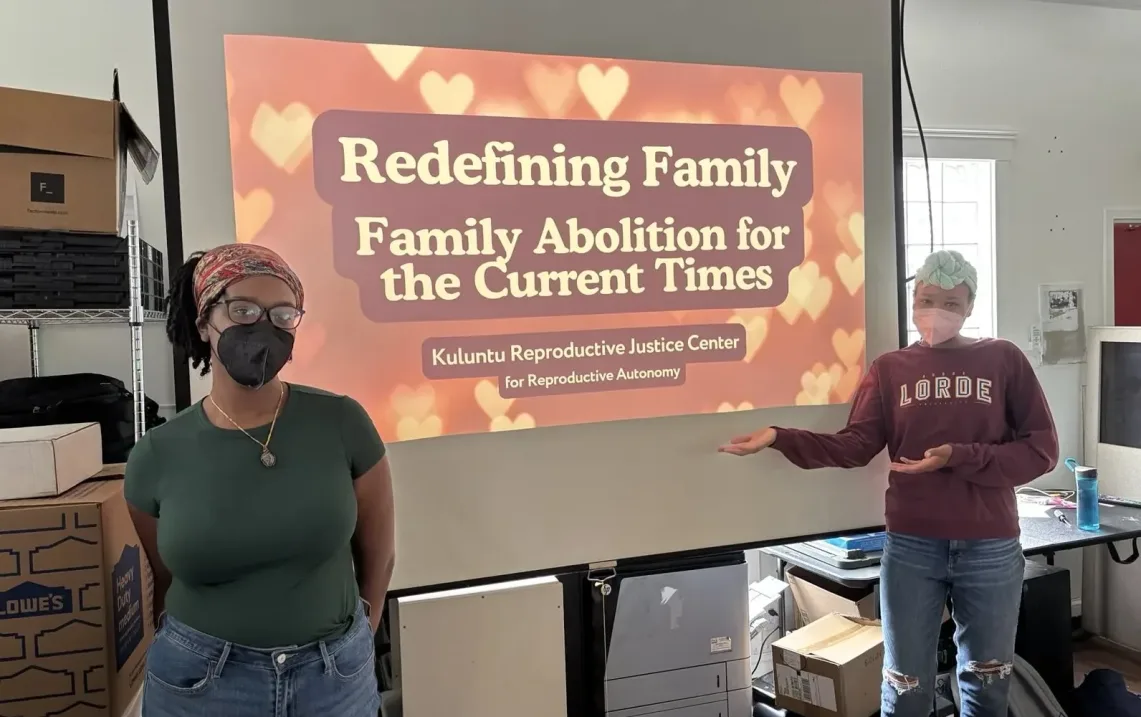
Ms. Foundation is proud to support our grantee partners, who are at the forefront of organizing and creating solutions that improve people’s lives and bring us closer to achieving a true democracy. The insight and perspective they provide is invaluable. The spotlight is a Q&A with Kuluntu Reproductive Justice Center (KRJC) Founder and Executive Director Khye Blue. KRJC helps families build healthy communities, birthworkers hone their craft and reach more families, and birth-related care providers support patients with culturally competent care in order to reduce exposure to harm. KRJC offers healing products, birthwork services, education, and support so Black people with multiple marginalized identities, including LGBTQIA people, those with disabilities, and people with non-normative family structures can make informed and liberating decisions about their bodies, families, and lives. They are a Birth Justice Initiative grantee partner. What brought you to this work? A myriad of things birthed KRJC but, at its core, my desire to see and create opportunities for multiply-marginalized Black people to live their best lives and have the ability to self determine brought me to this work. We know that individuals and families thrive most when they are in healthy communities and that’s where the word “kuluntu” comes from. It is a word in Xhosa — an Indigenous Southern African cultural group and language — that means “community,” and that is the foundation of everything we do. I come from a big family with a robust community structure and experienced, in real time, what it felt like to be a kid surrounded by so much love. I wanted to provide resources for everyone who desires a deeper care web to be able to access that. How do you connect/collaborate in your community? We like to say that our work is responsive as opposed to reactive. As a community-based and community-driven organization, we are constantly in conversation with community members, asking and receiving feedback on our writing, programming, and other projects. Some of these programs and projects include virtual gatherings and therapeutic spaces for Black LGBTQ+ parents and our Redefining Family literature review and anthology. We have collaborated with folks by collecting their feedback on the literature review—including asking what resources we should provide next, which led to the creation of the forthcoming anthology—conducting interviews, and collecting mixed media art submissions. We make regular efforts to hear directly from the communities we serve about what gaps we can fill. Who are your key partners? Most of our key partners are other Black-led reproductive and birth justice organizations. These organizations, including SisterSong, Black Feminist Future, and Black Mamas Matter Alliance, are on the front lines of combatting the perinatal mortality crisis as well as doing work to ensure the bodily autonomy of all people, but especially Black people. Some of our partners are organizations centering the needs of LGBTQ+ people and families who do not explicitly serve Black people and families, such as Family Equality and COLAGE. Some of our partners are deeply intersectional in nature, such as Forward Together and SPARK Reproductive Justice NOW! Recently, since releasing the Redefining Family literature review last year, we have been connecting more with family justice organizations and those doing work around community building, conflict management, family policing and surveillance, and bringing justice to those whose families have been separated. Some of these newer partners include Healthy and Free Tennessee, Afrocommuniversity Village, and Movement for Family Power. What are you learning or what are you teaching? We are learning every day how to bring more people into conversation with us. This includes learning how to communicate very complex topics in ways that are understandable to a wide range of people, especially those who do not share our identities. We are also learning how to be aware of the realities of the current climate while not being overwhelmed by the anxieties and hopelessness that many feel. We are learning how to show up and provide what people need in a time when people don’t always know what that may be. We are teaching about Redefining Family! After spending almost two years examining the nuclear family structure and decolonized alternatives, we have been in a mode of synthesizing. We released several materials folks can engage with to understand the historical and contemporary context around the nuclear family, how it functions as a symptom of capitalism, and what alternatives like radical care webs look like in practice. Tell us about a recent victory or something you’re proud of. We are proud of how far our work with Redefining Family has gone! People across the country (and even internationally!) have downloaded the literature review, engaged with the materials, shared zines with their communities, and attended workshops. Over the past year and a half, we have had the honor of sharing this work with birthworkers, social workers, nonprofit organizations, mutual aid organizations, academics, and more! What can philanthropy do better and/or how can individuals be helpful allies? It’s crucial, especially in this moment, for philanthropy to continue to show up, ask how they can utilize their access to resources for those on the front lines, and decolonize their work. It may feel uncomfortable to provide unrestricted funds or decrease the amount of oversight, but part of decolonization is moving at the speed of trusting those who are most affected by an issue, and trusting that resources will be used for the highest good of all involved. What gives you hope? There are so many people who are finding ways to resist the current moment in their communities and smaller networks. People who are connecting with their neighbors, feeding their friends, creating mutual aid networks and childcare swaps, and thinking about the ways we can take care of each other’s needs outside of capitalism. Even the smallest things such as decreasing our consumption, learning more about where our food comes from, learning to forage, baking bread, and being more engaged with the natural world around us are adding up and moving us closer to a world I would be proud to live in.