
November 20, 2026
Funding the Fight to End Gender-Based Violence
by Ms. Foundation for Women
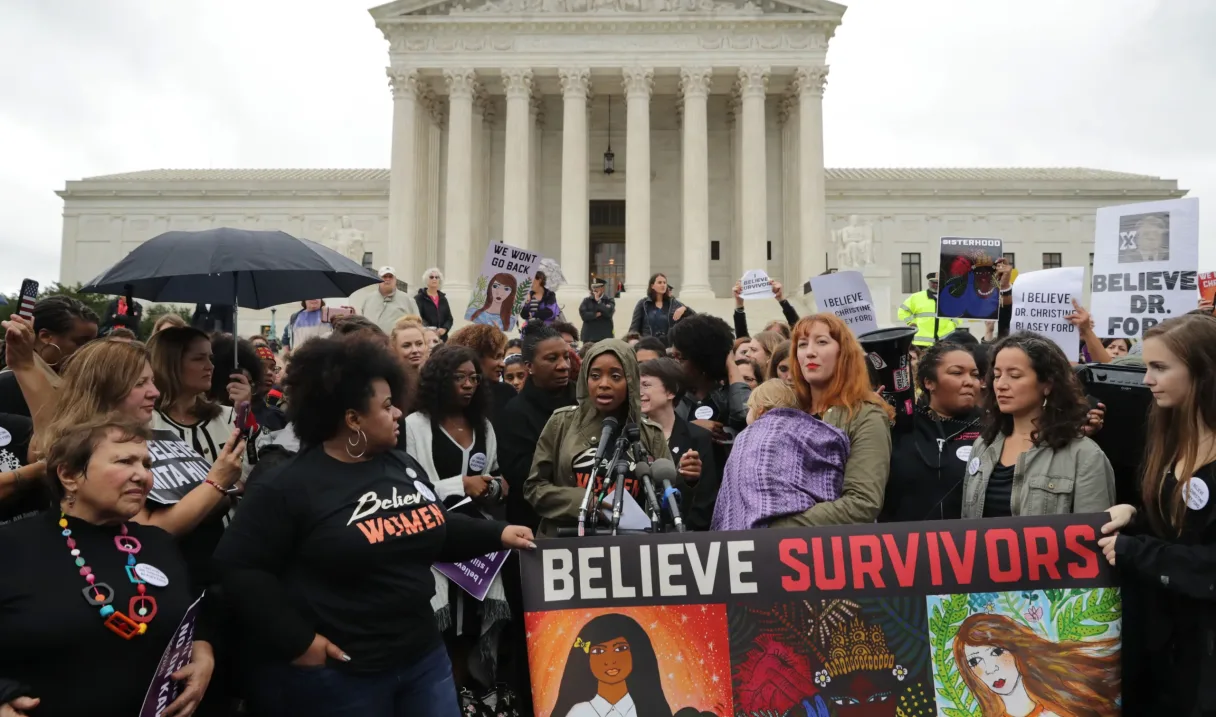
For more than five decades, Ms. Foundation for Women has supported the people and organizations working to end gender-based violence. Early on, the Foundation took a chance in supporting organizations and issues when no one else in philanthropy would, and served as a leader in the fight to end gender-based violence. When Ms. Foundation for Women began funding work to address violence against women in the early 1970s, the issue was rarely discussed publicly, and grassroots organizations supporting survivors had little institutional backing. Filling that gap was part of the Foundation’s mission from the start. “Women were grappling with intimate partner violence, domestic violence, but it was never seen,” recalls Ellen Liu, who joined the Foundation in 2011. “It was just something that women endured.” From the beginning, the Foundation’s grantmaking responded to what women themselves were organizing around. In the mid-1970s, Ms. Foundation became the first national foundation to fund domestic violence shelters and one of the first to back rape crisis hotlines. Ms. Foundation’s commitment to funding shelters and organizations providing direct support to survivors was personal for some staff. Liu recalls that Patricia Eng, one of the Foundation’s first program officers for its safety work, helped steer direct funding to domestic violence shelters in New York’s Chinatown, which had never seen that support before. More than 50 years later, the safety of women and gender-expansive people is still central to the Foundation’s work. Its approach has expanded to address the economic, political, and cultural conditions that enable violence, while investing in survivors’ leadership and collective power. Taking Risks, Setting the Standard Ms. Foundation’s early investments helped establish a model for women-focused philanthropy nationally. The Foundation set a standard for taking risks on issues that deeply impacted women at all levels but were often not discussed. “We often say this: Ms. goes where the road ends, and we start to pave our own path,” Liu says. “We find organizations that are doing that work on the ground that no one else might be funding right now. And [we take] a chance on them.” The Foundation was alone among philanthropies in funding organizations doing work on child sexual abuse, an issue long shrouded in silence and shame. “Other foundations wouldn’t touch it,” recalls Sara Gould, a former long-time president of Ms. Foundation. In the late 1990s, Gould notes, the Foundation ran the Safety Circle, along with a small number of individual donors who cared about this issue, to build a movement around child sexual abuse. This group brought grassroots organizations together to raise visibility, strengthen community, and advance policy change. The Foundation has historically invested in issues have receive little public attention. In the early 2000s, for example, our Safety portfolio included organizations addressing campus sexual assault, rape crisis services, violence in Native communities and street harassment. We also supported efforts to examine how traditional gender norms and expectations of masculinity contribute to violence against women. “We make visible those issues that are often invisible,” says Liu. “We’re funding organizations that are talking about a thing when others aren’t talking about a thing.” Expanding the Focus The Foundation’s own grantmaking evolved alongside the movement to end violence against women. While initially focused on direct services such as shelters for survivors of intimate partner violence, the Foundation increasingly turned its attention to addressing the systems, cultural norms, and power structures that perpetuate this violence. “It was important to address the spectrum of issues, holistically — economic issues that forced women into codependent situations, issues of housing, education, toxic masculinity,” says Liu. “It is such an intersectional issue.” As the first multi-issue national women’s fund, we also helped seed the development of other women’s funds, providing technical assistance to groups building similar institutions at the state level. These investments reflected a broader evolution in the Foundation’s approach, connecting direct services with organizing, coalition building, and investing in narrative change. The goal was no longer simply to help women escape violence, but to change the conditions that make it possible. No Single-Issue Solutions Gender-based violence rarely exists in isolation. Liu points to the links between intimate partner violence and economic dependence, as well as the ways abusive partners can weaponize restrictions on reproductive freedom. The Foundation recognized that effectively addressing it means bringing together organizations working across economic justice, education, reproductive freedom, and safety. Research backs this up. Liu points to a study that found that mobilizing feminist movements was the strongest predictor of falling rates of gender-based violence. “If you are supporting movement building and feminist movements that are independent from government,” she says, “and they have the funding and power to make change,” that is how violence goes down. Ms. Foundation grantees reflect this approach. FREEFrom tackles abuse through an economic justice lens, helping survivors build financial independence. HEART for Women and Girls supports Muslim women and girls in addressing abuse. Every Black Girl confronts the systems that harm Black girls, from school pushout to the juvenile justice system. Centering Survivors, Amplifying Voices Another important evolution, in both the movement and Ms. Foundation’s approach, has been seeing survivors not simply as people in need of services, but as leaders, organizers and agents of change. “Survivors are not victims,” Liu says. “This is a movement that needs to be led by survivors.” That shift also brought a recognition that the work needs communities of care where survivors can tell their stories with support without being re-traumatized. Grantees like Mirror Memoirs, which organizes survivors through theater and storytelling, and the Justice and Joy National Collaborative, which centers healing for young women of color, show how community care and movement building reinforce one another. The Foundation has helped emerging organizations grow and connected groups working on related issues so they can share strategies and build coalitions. “Ms. Foundation [exists] both as a funder and an amplifier,” says Liu. “Making issues visible is the kind of connective tissue that we provide, whether it’s storytelling, narrative change, convening or connecting partners.” Building Towards the Next Era Liu says the lesson for other funders is that real change doesn’t require enormous financial resources. “You can make a difference when there are issues that need to be supported,” she says. “People seem to think we’re bigger than we are, because we’re willing to go there. We’re willing to be bold and innovative, and to support something where there’s very little work that’s happening in that area.” Ultimately, ending gender-based violence can’t be separated from the work of advancing power, prosperity and freedom. That means survivors have the economic resources to build independent lives, the collective power to shape the policies and institutions that affect them, and the freedom to live with bodily autonomy and without fear. It is what Ms. Foundation has worked toward since its earliest days — helping turn invisible issues into movements for lasting change. When asked what she hopes the Foundation’s legacy will be 20 years from now, Liu says: “I would love for folks to say that we seeded some of the most innovative work [and] supported the organizations that were on the ground creating the pathways for eliminating gender-based violence [and] that came together as an intersectional movement.” Photo credit: Getty Images